Comparative skin microbiome analyses reveal differences between wild populations and captive groups of the Montseny brook newt (Calotriton arnoldi)
Abstract
The Montseny brook newt, Calotriton arnoldi, is a Critically Endangered amphibian species endemic to the Montseny Massif in Catalonia, Northeastern Spain. Due to population declines and threats to its natural habitat, an ex-situ breeding program was initiated in 2007. A key goal of the program is to ensure the survival of captive-bred individuals after reintroduction, which in amphibians heavily relies on the specimens’ microbiome being capable of protecting them from environmental microorganisms, especially considering the global Chytridiomycosis pandemic caused by the fungi Batrachochytrium dendrobatidis (Bd) and Batrachochytrium salamandrivorans (Bsal). This study aims to characterize the skin microbiome of wild and captive C. arnoldi specimens and identify differences in their composition, contributing to future research on the microbiome’s impact in captive-bred individuals upon reintroduction. Up to 5996 ASVs (Amplicon Sequence Variants) were identified from 138 samples from 21 and 61 wild and captive-bred individuals, respectively. Results indicate that wild populations from different subspecies have significantly different skin microbiome composition, as do wild and captive-bred groups from the same subspecies. Additionally, dissimilarities in skin microbiome variability were only found within each subspecies, between wild and captive-bred groups. In terms of composition, certain bacteria were identified as potential markers for both wild and captive environments. Enhancing skin microbiome variability might improve the survival prospects of reintroduced specimens. Thus, exposing captive specimens to a more natural environment while in captivity or a soft-release procedure could potentially mitigate the absence of exposure to other bacteria and potential pathogens from their native environment.
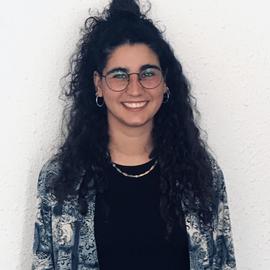
Maria Estarellas
MSc Student · Now PhD Student at Institut de Biologia Evolutiva (CSIC - UPF)
My research focused on the emergent infectious diseases that are threatening amphibian populations, studying the composition of their microbiome.

Anthony Bonacolta
PhD Student · Now Postdoctoral Fellow at The University of British Columbia
My PhD research focused on understanding the roles of micro-eukaryotes and bacteria in marine organisms, including the coral holobiont during bleaching from a single-cell perspective.