Blueprints for conservation — Reference genomes for Mediterranean corals
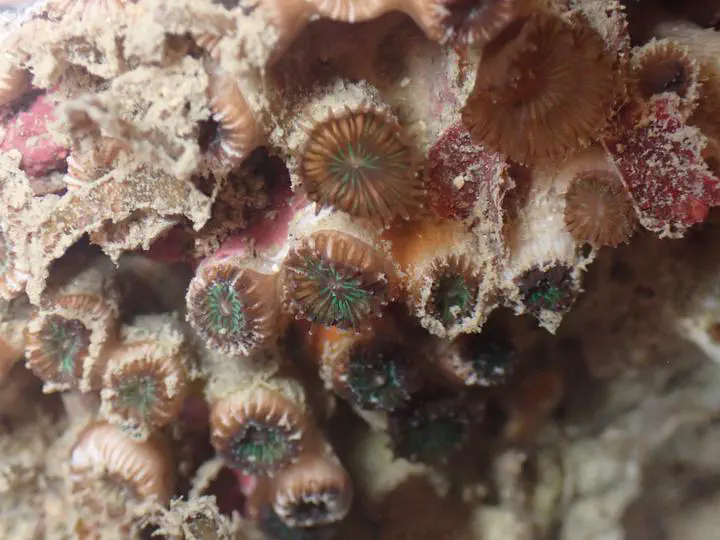 Photo by Javier del Campo
Mediterranean corals are critically threatened by the climate crisis, and protecting them increasingly depends on the molecular tools we bring to bear. Genome-scale data offer a precision that other markers cannot: they resolve population structure, adaptive potential, and evolutionary history at a resolution that can open up alternative conservation strategies. Yet for most Mediterranean corals no reference genome exists. This project sets out to build that foundation, sequencing reference genomes for at-risk species to strengthen the conservation of these corals and the ecosystems they sustain.
We are generating reference genomes for nine Mediterranean coral species collected through the Catalan initiative for the Earth BioGenome Project, Biogenoma: Caryophyllia inornata, Balanophyllia europaea, Oculina patagonica, Leptogorgia sarmentosa, Maasella edwardsi, Paramuricea grayi, Pennatula rubra, Pteroeides griseum, and Veretillum cynomorium. The list spans the two major coral lineages, Hexacorallia and Octocorallia, and deliberately samples a wide range of life histories — hard and soft corals, solitary and colonial forms, symbiotic and aposymbiotic species. That ecological and morphological breadth should be mirrored in genomic diversity, which the reference genomes will reveal. According to GoaT, none of these species are currently registered in a genome-sequencing pipeline, so each assembly would be the first of its kind.
Realising these genomes means solving problems that are specific to corals, and the project is organised around three methodological aims, each paired with a commitment to share what we develop:
- High molecular weight DNA and Hi-C for corals. Recovering high molecular weight (HMW) DNA, and preparing and sequencing chromatin-linked (Hi-C) libraries for chromosome-scale scaffolding, is difficult in most corals. Drawing on the team’s experience generating coral reference genomes, we will optimise both steps and publish the protocols.
- Assembly in the presence of a rich microbiome. Corals carry diverse microbial communities that complicate the assembly of a clean host genome. Our work on the coral holobiont, from both the animal and microbial sides, positions us to refine assembly approaches and establish reproducible workflows for the community.
- Recovering cobiont genomes. As the Darwin Tree of Life has shown, animal reference-genome data often contain the genomes of associated organisms — cobionts — that can be assembled and taxonomically placed. Given how central symbionts are to coral physiology, we will build on our experience with coral symbiont genomes to develop, and openly share, computational pipelines that extract the cobiont signal from our assemblies.
Taken together, the project delivers more than nine genomes. By treating each coral as a holobiont rather than a single organism, and by releasing protocols and workflows alongside the data, it aims to make high-quality coral genomics more accessible to the wider community — and to give the conservation of Mediterranean corals a firmer genomic footing.
Javier del Campo
Group Leader
My research aims at understanding the global diversity and distribution of eukaryotic and prokaryotic microbes employing curated phylogenetic frameworks focusing on novel environmental taxa.