🪸 The del Campo Lab sails with Tara Coral
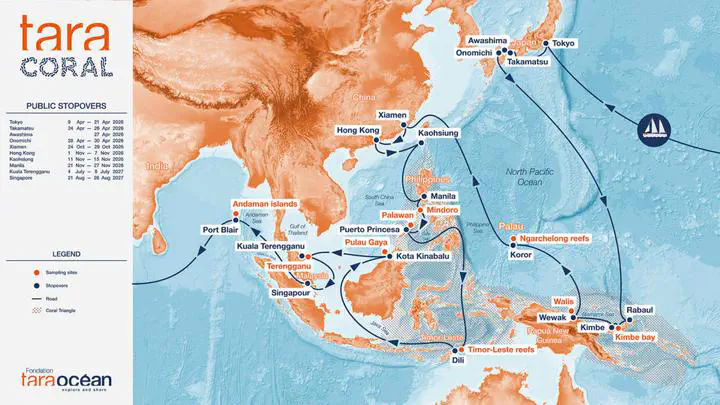 Tara Coral route and public stopovers. © Fondation Tara Océan
Last December, the schooner Tara left its home port of Lorient for its 14th expedition: Tara Coral. Since May, the scientific phase has been underway in the Coral Triangle, the most biodiverse marine region on the planet, where reefs have so far withstood warming better than almost anywhere else. Over 18 months of sampling from Papua New Guinea and Palau to the Philippines, Malaysia, Timor-Leste, and the Andaman Islands, more than 40 partner institutions will try to understand why some corals resist thermal stress while others bleach and die.
The del Campo Lab is contributing the protist and microbial eukaryote component of the expedition. Javier del Campo is part of the scientific consortium, and Joana Krause-Massaguer will join the scientific crew on board in 2027.
Corals do not face climate change alone; they face it together with their microbes 🦠. Understanding the protists and other microbial partners of the corals of the Coral Triangle may hold part of the answer to their remarkable resilience, and we are thrilled to contribute to finding it. Stay tuned!
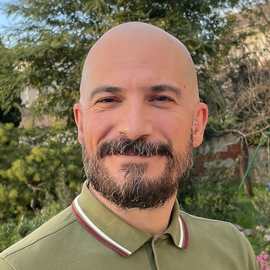
Javier del Campo
Group Leader
My research aims at understanding the global diversity and distribution of eukaryotic and prokaryotic microbes employing curated phylogenetic frameworks focusing on novel environmental taxa.